
A stack of surplus pallets behind a warehouse usually means one of two things – tied-up space or tied-up value. If you are asking who buys used pallets, the short answer is that pallet recyclers, pallet management companies, local resellers, manufacturers, and some distribution businesses all do. The better question is which type of buyer fits your volume, pallet mix, and operating needs.
For most commercial sites, the right buyer is not simply the one willing to take pallets away. It is the one that can assess condition accurately, schedule pickups reliably, and create a repeatable process your team does not have to manage every week.
Who buys used pallets and why
Used pallets have value because they can be reused, repaired, broken down for parts, or recycled into other wood products. That creates a market, but not every buyer is looking for the same thing.
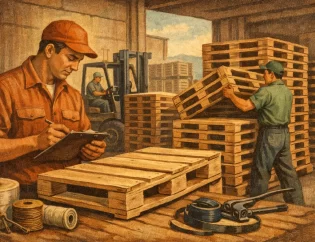
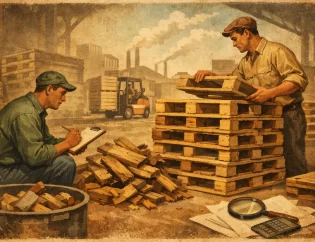
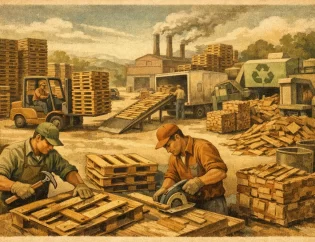
Pallet recyclers are often the most common buyers. They sort pallets by size, condition, and resale potential. Reusable pallets may be repaired and resold. Lower-grade pallets may be dismantled for lumber recovery or processed for recycling. For businesses generating steady pallet volume, recyclers are usually the most practical option because they can handle mixed loads and ongoing pickups.
Pallet management companies take that one step further. Instead of acting as a one-time buyer, they manage pickup, recovery, recycling, and in many cases pallet resale across one site or multiple locations. That matters if your business does not want to coordinate with different local vendors, negotiate site by site, or guess whether each stack has resale value.
Some manufacturers and warehouses also buy used pallets directly, especially common sizes that fit their internal shipping programs. These buyers can be selective. They may only want standard 48×40 pallets, Grade A or Grade B condition, and truckload quantities. If your inventory is consistent and in strong condition, this can work well. If it is mixed, damaged, or irregular, direct buyers tend to be less efficient.
Local pallet brokers and resellers are another part of the market. They purchase pallets, aggregate inventory, and sell into regional demand. The trade-off is consistency. Some are responsive and reliable. Others are volume-driven and only interested when market demand is strong.
What kinds of used pallets buyers want
Not all used pallets are equal in the resale market. Buyers usually look at four things first: size, condition, quantity, and location.
Standard sizes move fastest. In most U.S. commercial settings, 48×40 wood pallets are the easiest to remarket because they are widely used in manufacturing, warehousing, retail, and transportation. Odd sizes can still have value, but the buyer pool is smaller and pricing is less predictable.
Condition has a direct impact on whether pallets are purchased, picked up for free, or charged for removal. Clean, structurally sound pallets with no major breaks are the most desirable. Repairable pallets may still have value, but less. Heavily damaged pallets, wet pallets, contaminated pallets, or pallets with excessive mold, broken stringers, or protruding nails may shift from resale inventory to recycling material.
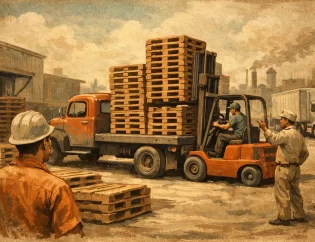
Quantity matters because transportation costs shape the economics. A buyer may pay for a full trailer of good-quality pallets but offer free removal or reduced rates for smaller loads. If a site only has a few scattered stacks, freight can outweigh resale value quickly.
Location also affects demand. In major logistics markets, used pallets are easier to move and sell. In remote areas, even usable inventory can bring lower returns because the pickup and repositioning costs are higher.
When businesses get paid for used pallets
A common assumption is that every used pallet has cash value. Sometimes that is true. Sometimes the real value is avoiding disposal costs and freeing up yard space.
Businesses are most likely to be paid when they have standard-size pallets, consistent volume, and reusable condition. If your facility produces a reliable stream of 48×40 pallets in stackable condition, buyers can often turn that into immediate resale inventory. That creates room for direct payment.
If the pallets are mixed grade, partially damaged, or generated in uneven quantities, the transaction may look different. A buyer may still remove them at no charge if enough of the load can be repaired or recycled profitably. In lower-value situations, there may be a removal fee, especially if the pallets require heavy sorting or disposal.
This is why a serious pallet partner typically evaluates each account based on type, volume, and condition rather than offering one flat answer to every customer. It depends on what is coming out of your operation and how often.
Who buys used pallets for large or multi-site operations
For larger businesses, the issue is rarely just who buys used pallets. It is who can do it consistently across multiple facilities without creating more admin work.
A single-site warehouse may be able to work with a local recycler on an informal schedule. A manufacturer with ten locations usually cannot. Different service levels, inconsistent reporting, and varying pallet pricing create unnecessary friction. Operations teams end up chasing pickups, reconciling invoices, and dealing with overflow at the dock.
That is where a national pallet management model makes more sense. One provider can coordinate pickups, recover reusable inventory, recycle what cannot be reused, and provide visibility across locations. Instead of treating pallets as a recurring disposal problem, the business gets a controlled process.
That model also supports procurement and sustainability goals. Recoverable pallets can be remarketed. Waste hauling can be reduced. Reporting becomes cleaner. Internal teams spend less time reacting to pileups or handling exceptions.
How to tell if your pallets are worth selling
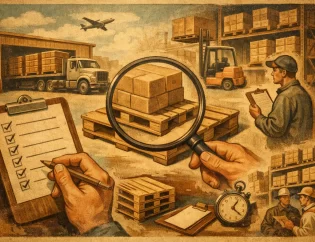
The fastest way to estimate pallet value is to look at your inventory the way a buyer would. Are the pallets mostly one standard size? Are they dry, stackable, and structurally intact? Do you generate enough quantity for efficient pickup? Can they be loaded quickly at your site?
If the answer is yes across most of those questions, there is a good chance your pallets have resale value. If the answer is mixed, you may still have a viable recycling stream, but the economics will be different.
It also helps to separate reusable pallets from scrap before pickup. Buyers prefer clean sorting because it reduces labor and speeds up loading. That does not mean your team should spend hours building a pallet grading program internally. It means basic organization can improve outcomes.
Photos, pallet counts, and size details also make quoting easier. A buyer can give more accurate guidance when they know whether your load is 200 standard pallets in good condition or a mixed stack of broken inventory, oversized units, and debris.
What to ask a used pallet buyer before scheduling pickup
Price matters, but it is not the only thing that matters. A low quote can become expensive if the vendor misses pickups, rejects inventory unexpectedly, or cannot support your volume over time.
Ask how they evaluate pallet condition and whether they buy, remove for free, or charge for lower-grade material. Ask how quickly they can schedule pickups and whether they support recurring service. If your company has more than one facility, ask whether they can handle multiple locations under one account structure.
You should also ask about reporting. For many operations leaders, visibility is part of the value. Knowing what was removed, what had resale value, and what was recycled helps with budgeting and internal accountability.
Finally, ask how they handle changing volume. Pallet generation is not always steady. Seasonal peaks, promotions, inventory shifts, and inbound fluctuations can all increase accumulation. The right partner should be able to adjust without turning your pallet area into a bottleneck.
Why the best buyer is often a service partner
The used pallet market is real, but for commercial businesses, the best outcome usually comes from a service relationship rather than a one-time sale. A pallet buyer that also manages pickup, recycling, and remarketing can create a cleaner process and a better financial result over time.
That is especially true when pallet conditions vary from load to load. A service-led model can recover value where possible, route damaged material into recycling, and keep your site clear without forcing your staff to find a new outlet every time conditions change.
For companies that ship, receive, and store product every day, pallets should not become a side project. They should move through a managed recovery stream that supports operations, reduces waste, and keeps usable material in circulation. That is the point where pallet removal stops being a cleanup task and starts becoming one less concern for your business.