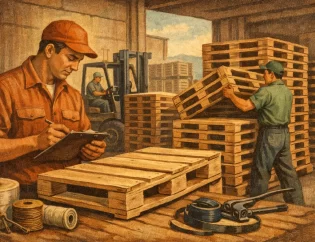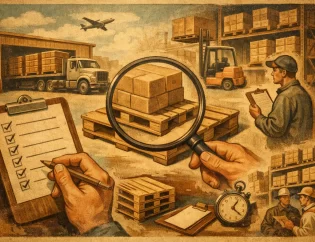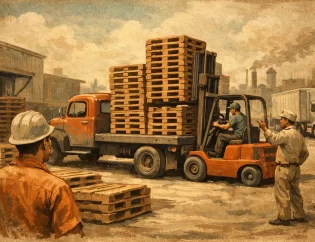

Excess pallets usually do not become a priority until they start taking over dock space, creating safety issues, or triggering another waste haul. At that point, the better question is not how to get rid of them. It is how to sell used pallets for pickup in a way that saves time, recovers value, and keeps operations moving.
For warehouses, manufacturers, distributors, and retail operations, pallet removal is rarely a one-time issue. Volume fluctuates, pallet quality varies, and different sites often end up handling the same problem in different ways. That patchwork approach tends to create more admin work, inconsistent pickup timing, and missed recovery value on reusable pallets.
Why businesses sell used pallets for pickup
Most commercial sites are not trying to become pallet experts. They want a reliable way to clear space, control costs, and avoid assigning internal staff to manage a low-value but recurring operational task.
Selling used pallets for pickup can support all three goals. If pallets are still reusable, they may have resale value instead of disposal cost. If they are broken or mixed-grade, they may still be recyclable through a pallet recovery program. In either case, the business benefits when pickup and downstream handling are coordinated by a single service partner.
There is also a sustainability advantage. Sending recoverable pallets into a recycling and remarketing stream helps reduce landfill waste and extends the useful life of wood materials. For companies with internal environmental targets, that matters just as much as the operational payoff.
What determines whether you get paid, free pickup, or paid removal
Not every pallet load is handled the same way. The value of a pickup depends on the condition, type, quantity, and location of the inventory.
Reusable standard-size pallets in consistent grades are generally the strongest candidates for direct payment. These are easier to inspect, sort, and place back into circulation. Mixed stacks with a high percentage of damage may still qualify for pickup, but the economics can shift toward free removal or a paid service depending on freight, labor, and processing requirements.
Volume matters too. A small pile of assorted pallets at one location may not justify the same return as a full truckload of sortable inventory. On the other hand, businesses with recurring volume often have more options because regular pickups create predictable recovery opportunities.
This is where many companies lose time trying to estimate value on their own. The practical approach is to work with a provider that can assess the load, explain the likely outcome, and schedule service based on what is actually on site.
How to sell used pallets for pickup without adding admin work
The fastest process is usually the simplest one. A business should be able to request service, share the basic details of its pallet inventory, and receive a clear path forward.
Start with the essentials: pallet quantity, common pallet sizes, visible condition, pickup address, and whether the pickup is a one-time request or part of an ongoing need. Photos can help when the load is mixed or stored in a way that makes condition harder to describe. That upfront visibility helps set expectations on whether the pickup will generate payment, qualify for no-cost removal, or require a service fee.
From there, scheduling should fit around operational realities. Some sites need dock appointments. Others need trailer-based removal, yard collection, or coordination with receiving hours. The right pickup model depends on how your facility runs, not on a rigid service template.
Once pallets are removed, the best providers also reduce paperwork. That can mean clearer transaction records, better visibility into recurring pickups, and less back-and-forth between site teams and accounting.
A one-site pickup is different from a multi-location program
A single warehouse with occasional overflow has one set of needs. A business managing pallet accumulation across several facilities has another.
At one site, the priority may be straightforward: clear space, avoid waste hauling, and recover value where possible. Multi-location operations usually need more than pickup capacity. They need consistency. That includes standardized service rules, coordinated scheduling, centralized reporting, and one point of accountability.
Without that structure, pallet management becomes fragmented quickly. One facility sells reusable pallets. Another pays for removal. A third stores damaged pallets too long because no one knows who to call. The result is uneven service, weak reporting, and preventable cost.
For companies operating across multiple regions, a national service model makes a measurable difference. Instead of relying on separate local vendors with different response times and pricing structures, businesses can manage pallet recovery under one program.
What to prepare before pickup day
A smooth pickup starts before the truck arrives. That does not mean a complicated prep process, but a few practical steps can prevent delays.
Pallets should be stacked in a way that is safe and accessible. If your site separates standard reusable pallets from damaged or odd-size units, mention that in advance. If forklift access, dock availability, or yard conditions affect loading, those details should be shared at scheduling rather than at arrival.
It also helps to identify whether pallets are heat-treated, stringer or block style, or mixed with scrap wood and non-pallet debris. Contamination is a common reason loads are reclassified. A clean, well-described pallet pickup is easier to process and usually easier to value accurately.
Businesses with recurring volume can go a step further by setting simple internal rules. For example, one staging area for reusable pallets and another for damaged units can speed up inspection and reduce confusion at the site level.
The trade-off between highest price and easiest service
Some companies spend a lot of time chasing the highest possible pallet price. Sometimes that makes sense, especially for large volumes of uniform, reusable inventory. But in many cases, the better decision is to weigh total operational value, not just unit price.
A slightly higher offer does not always translate into a better outcome if the provider is slow to schedule, inconsistent across sites, or unable to handle mixed loads. Delayed pickup can create dock congestion, extra handling, and safety risks that cost more than the difference in pallet value.
The same applies to businesses that generate both reusable and damaged pallets. Managing separate vendors for resale, recycling, and disposal may look efficient on paper, but it often creates more friction than it saves. One coordinated service model tends to produce better long-term results.
That is why many companies prefer a partner that can buy usable pallets, remove lower-grade inventory, and support ongoing pallet needs through one channel. The value is not only in what leaves the site. It is in the reduced effort required to keep the process under control.
Sell used pallets for pickup as part of a broader pallet strategy
If pallet buildup happens more than once, the issue is bigger than a single cleanup. It is part of your material flow.
A stronger approach is to treat pallet pickup as one piece of a broader program that includes recovery, recycling, resale, and supply planning. When these pieces are managed together, businesses gain better control over pallet costs and fewer surprises at the site level.
That can include scheduled pickups based on volume thresholds, visibility into transaction history, and support for both surplus removal and future pallet purchases. For operations teams, that kind of structure means one less vendor category to chase and one less recurring issue to solve from scratch each month.
For sustainability teams, it also creates a clearer record of how pallet materials are being diverted from waste streams and returned to productive use. Operational efficiency and environmental performance do not have to be separate goals here. They can support each other.
Pallet Pickup works with commercial customers that need that kind of practical consistency, whether the requirement is a one-time pallet removal or a coordinated program across multiple sites.
The best time to address excess pallets is before they become a space problem, a safety concern, or another line item on your waste bill. If your business has reusable inventory sitting idle, a pickup program can turn that backlog into recovered value and a cleaner operation.