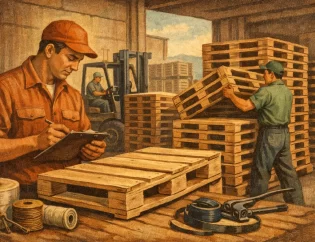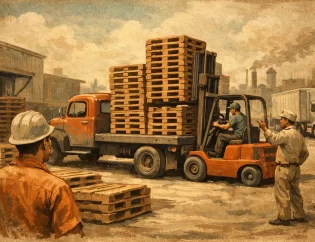
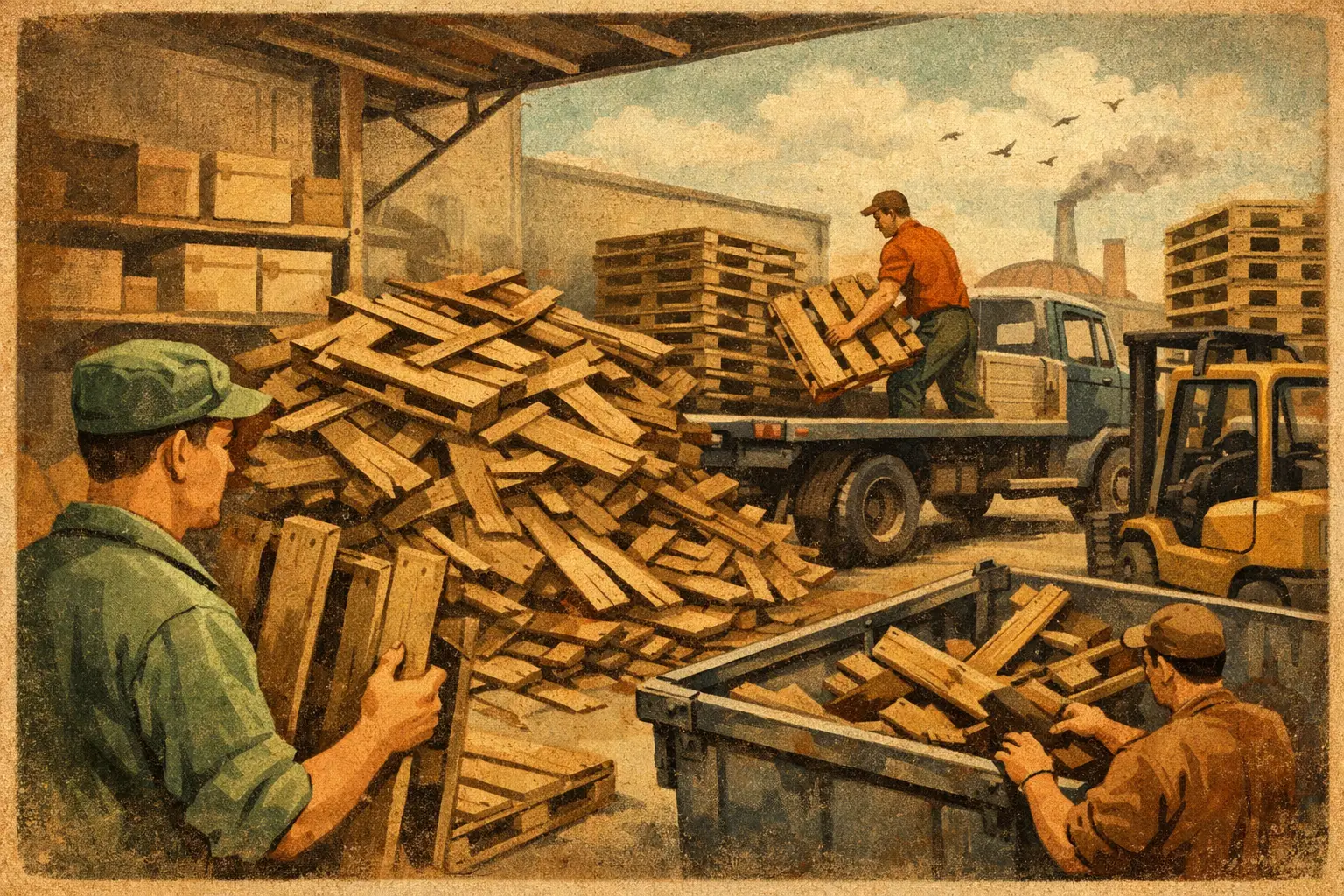
When broken pallets start stacking up behind active inventory, disposal stops being a housekeeping issue and turns into an operations problem. A solid warehouse pallet disposal guide helps warehouses avoid blocked aisles, reduce hauling costs, recover value from usable pallets, and keep recycling efforts organized without adding more work for internal teams.
Why pallet disposal becomes a warehouse issue fast
Most facilities do not struggle with pallets because they lack space on paper. They struggle because pallet volume changes faster than normal waste processes can handle. Seasonal surges, inbound overages, damaged returns, rejected loads, and mixed pallet types can all create buildup in a matter of days.
Once that happens, the impact spreads. Floor space gets tied up. Receiving and shipping teams work around stacks that should not be there. Safety risk increases when damaged pallets are left in active areas. If the only solution is to send everything to a dumpster, costs rise and reusable inventory gets lost.
That is why pallet disposal works best when it is treated as part of warehouse flow, not as an occasional cleanup project.
What a practical warehouse pallet disposal guide should cover
A useful warehouse pallet disposal guide starts with one question: what kind of pallets are you actually dealing with? Not every load has the same value, handling requirement, or removal cost.
Usable standard pallets may be suitable for resale or pickup with revenue recovery. Repairable pallets may still hold value depending on grade, volume, and market demand. Broken or low-grade pallets may be recyclable, but they often require a different pricing structure. Mixed loads can also affect scheduling because they take longer to sort and process.
The condition of the pallets matters just as much as quantity. A stack of clean, consistent 48×40 pallets is very different from a mixed pile of broken skids, odd sizes, and contaminated material. One may be a recoverable asset. The other may require paid removal. The right disposal plan accounts for that difference upfront.
Start with a simple pallet audit
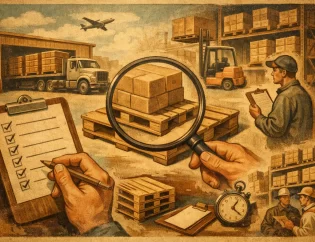
Before scheduling removal, document what is on site. Most warehouse managers do not need a perfect inventory count, but they do need a reliable estimate. Count approximate pallet volume, note the pallet sizes, separate standard from non-standard units, and identify how many are reusable versus damaged.
This step prevents the most common service mismatch. If a provider expects reusable pallets and arrives to find mostly scrap, pricing and pickup terms may change. A basic audit helps avoid delays and gives your team a clearer view of whether the pallet pile is a cost issue, a recycling opportunity, or both.
Separate pallets by condition if possible
If labor allows, sort pallets into at least two categories: reusable and damaged. A third category for odd-size or specialty pallets can help when those make up a meaningful share of your volume.
This does two things. First, it protects value by keeping good pallets from being treated as waste. Second, it speeds up pickup and processing. If a carrier or recycling partner can load by grade instead of sorting on site, the process is usually faster and easier to schedule.
For larger facilities, this can become a standing process rather than a one-time task. A designated pallet accumulation area with clear sorting rules helps keep the issue contained.
Disposal options and when each one makes sense
There is no single best method for pallet disposal. The right option depends on pallet quality, volume, location, and how often material is generated.
Recycling and recovery
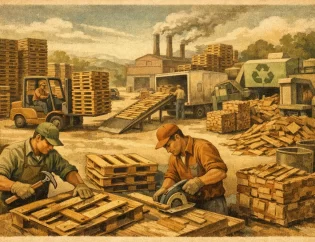
For many warehouses, recycling is the most practical path. Damaged wood pallets can often be broken down and processed rather than sent to landfill. If your volume is consistent, this approach supports sustainability reporting and can lower waste hauling dependence.
The trade-off is that recycling value varies. Clean wood is easier to process than pallets mixed with metal, plastic wrap, product residue, or heavy contamination. If your site generates mostly damaged pallets, recycling still makes sense, but it may not create revenue.
Pickup for reusable inventory
If you have standard pallets in good condition, pickup can shift from disposal to asset recovery. Warehouses often overlook how much usable pallet inventory is sitting idle in overflow areas. When those pallets are resold or re-entered into circulation, they free up space and can offset operating costs.
This option works best when pallets are consistent in size and condition. It is less effective for highly mixed loads or specialty pallet formats with limited resale demand.
Paid removal
Some pallet loads need straightforward removal. That is common when pallets are badly broken, mixed with debris, wet, molded, or generated in low-density quantities that are hard to remarket.
Paid removal is not necessarily a bad outcome. In many cases, it is still more efficient than using internal labor to cut down pallets, manage dumpster overflow, or coordinate multiple local vendors. The key is transparency. You want to know why a load carries a removal cost and whether sorting or consolidation could improve terms next time.
How to build a better pallet disposal process
A warehouse rarely benefits from handling pallet disposal as a series of emergencies. The better approach is a repeatable process tied to volume and site activity.
Start by setting a trigger point for pickup. That might be a full trailer-equivalent of pallets, a defined number of stacks, or a storage threshold in your yard or dock area. Waiting until pallets become a fire lane or space problem usually means you are scheduling too late.
Next, assign ownership. Pallet disposal often falls into a gray area between operations, maintenance, and procurement. One point of contact keeps scheduling simple and helps prevent pickup requests from being delayed.
Then standardize your site prep. Make sure pallets are accessible, counted reasonably well, and separated by condition when practical. If your business operates across multiple locations, use the same categories and reporting expectations at every site. That consistency matters when you want visibility into cost, recovery value, and recycling activity.
Where warehouses lose money on pallet disposal
The biggest cost is usually not the pickup itself. It is the friction around it.
When pallet disposal is unmanaged, good pallets get thrown out with damaged ones. Dock space is consumed by slow-moving scrap. Internal teams spend time rearranging stacks instead of handling freight. Local vendors may offer inconsistent pricing or availability, which creates more admin work and less control.
There is also the hidden cost of fragmented service. A business with several facilities can end up using different haulers, different pickup schedules, and different tracking methods at each location. That makes it harder to compare performance or support sustainability reporting with clean data.
A centralized pallet partner can reduce those gaps by handling pickup, recycling, resale, and reporting through one process. For multi-site companies, that often matters as much as the disposal itself.
What to ask a pallet disposal provider
Service quality depends on more than whether a truck shows up. Warehouses should ask how the provider handles reusable pallets, broken pallets, mixed loads, and location-specific volume swings. They should also ask whether service can scale across multiple sites and whether transactions are tracked in a consistent way.
Responsiveness matters too. A provider may look cost-effective on paper, but if pickups lag during peak periods, your warehouse still absorbs the operational disruption. The best fit is a partner that can adjust service based on pallet type, volume, and urgency without making your team manage every exception manually.
This is where a company like Pallet Pickup can fit well for commercial operations that want one less vendor problem to manage. National coverage, scheduled pickups, pallet recovery, recycling support, and location-level tracking create a simpler model than piecing together local solutions site by site.
Make pallet disposal part of warehouse control
Pallet disposal works best when it is treated like any other material flow. Track what comes in, sort what can be recovered, remove what cannot, and set a schedule before the pile becomes a problem.
If your warehouse is generating pallets every week, you do not need a cleanup day. You need a process that protects floor space, supports recycling, and gives your team a dependable path for every pallet type. The right system does not just clear the yard – it gives your operation more control with less effort.