Pallet stacks usually start as a small housekeeping issue. Then they take over a corner of the warehouse, create safety concerns at the dock, and turn into a recurring disposal problem nobody wants to own. A solid commercial pallet recycling guide helps fix that before excess pallets become wasted space, added labor, and unnecessary hauling costs.
For most businesses, pallet recycling is not just about getting rid of wood. It is about controlling site conditions, reducing vendor friction, and recovering value from an asset stream that is often ignored until it becomes urgent. If your operation handles regular inbound or outbound freight, the right process can remove one more concern from your team.
What a commercial pallet recycling guide should actually solve
A practical recycling program should do more than schedule a truck when the pile gets too big. It should answer four operational questions clearly: what needs to be removed, what can be reused, what has resale value, and how often service is required.
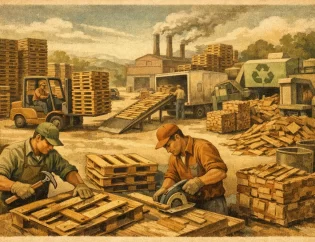
That matters because not every pallet has the same outcome. Some pallets can be returned to circulation with minimal handling. Some need repair or breakdown for material recovery. Others are mixed loads that require sorting before any value can be assigned. If your process treats every pallet as waste, you will usually pay more than necessary and miss opportunities to recover usable inventory.
This is where many businesses run into trouble with fragmented local service. One site may get regular pickups, another may wait too long, and a third may be paying disposal rates for pallets that could have been remarketed. The issue is rarely the pallets themselves. It is the lack of a consistent commercial process behind them.
Start with pallet volume, type, and condition
The fastest way to improve pallet recycling is to stop treating it as a one-size-fits-all disposal task. Your pickup plan should reflect three things: how many pallets you generate, what pallet types you handle, and what condition they are in when they leave your floor.
Volume affects everything from trailer size to pickup frequency. A manufacturer generating several loads per month needs a different model than a retailer with irregular accumulation across regional locations. If volume is underestimated, piles build up. If service is too frequent, transportation costs and handling time go up.
Pallet type also changes the economics. Standard 48×40 pallets are typically easier to recover and resell than mixed specialty sizes. Stringer, block, heat-treated, custom-built, and export pallets all need to be evaluated differently. A provider that understands those distinctions can tell you whether your inventory belongs in reuse, recycling, or paid removal.
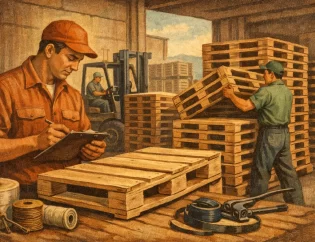
Condition is just as important. Clean, reusable pallets may have direct value. Repairable pallets may still support recovery. Heavily damaged, contaminated, or unsafe pallets may need recycling only. A good system identifies those categories early so your team is not spending labor moving material with no clear outcome.
Build a pickup process around operations, not emergencies
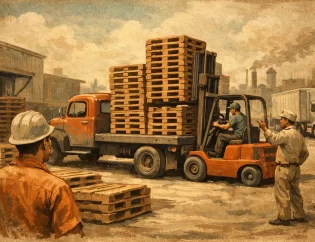
The most expensive pallet pickup is the one arranged too late. By that point, pallets are blocking traffic, creating dock congestion, or forcing your team to shift resources away from core work just to clean up the yard.
A better approach is to align pallet removal with your shipping rhythm. Some sites need scheduled weekly or biweekly service. Others do better with threshold-based pickups triggered by pallet counts, trailer fill levels, or seasonal demand. It depends on your footprint and throughput.
The key is predictability. When pickup windows, acceptable pallet grades, and on-site staging rules are documented, your warehouse team spends less time explaining conditions and more time keeping freight moving. That also reduces the back-and-forth that often happens with vendors who quote one service level but arrive expecting another.
For multi-site businesses, consistency matters even more. If each location uses a different provider, reporting becomes difficult, pricing varies, and service quality can shift from market to market. A centralized model gives operations and procurement teams a clearer view of what is being removed, what is being recovered, and where costs are increasing.
Know when pallets are a cost and when they are an asset
One of the biggest mistakes in pallet management is assuming every stack has the same financial impact. In reality, pallets usually fall into three business categories.
First, there are reusable pallets that may generate direct return through resale or buyback. These are the easiest to overlook when teams are focused on clearing space quickly. Second, there are low-value or mixed-condition pallets that still make sense to recycle because they reduce landfill use and site clutter. Third, there are pallets that require paid removal due to damage, contamination, odd sizing, or handling complexity.
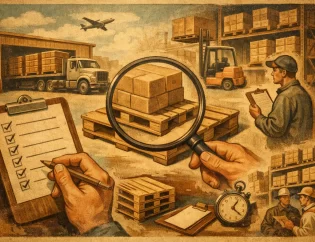
The right commercial pallet recycling guide should help your team separate those categories before pickup. That does not mean turning warehouse staff into graders. It means setting simple acceptance standards so everyone understands what should be stacked together, what should be kept dry, and what should be isolated.
That small operational change can make a noticeable difference. Cleaner loads are easier to evaluate, reusable inventory is less likely to be written off as waste, and invoicing tends to be clearer because the service outcome was defined in advance.
Tracking matters more than most teams expect
Pallet recycling becomes harder to manage when no one can see it across locations. A plant manager may know what is happening at one facility, but procurement, finance, and sustainability teams often need a broader picture.
This is where tracking stops being a nice-to-have and becomes part of cost control. If your business ships from multiple warehouses or stores, you need visibility into pickup frequency, pallet counts, recovery rates, and transaction history. Without that, it is difficult to compare sites, challenge inconsistent charges, or understand whether reusable pallet value is being captured.
A centralized management approach also supports internal reporting. Many companies are under pressure to show measurable waste diversion and better resource use. Pallet recycling may be only one part of that story, but it is a visible and recurring one. Clear records help operations teams support those goals without building manual spreadsheets every month.
For national or regional organizations, this is often the point where a single-provider model starts to make the most sense. Companies like Pallet Pickup are built around that kind of visibility, combining pickup coordination, recycling, resale, and account management under one process instead of leaving each site to solve the same problem differently.
Common issues that slow down pallet recycling
Most pallet recycling problems are operational, not technical. The pallets are there. The need is obvious. What gets in the way is usually inconsistent execution.
Mixed loads are a frequent issue. When standard pallets, broken custom pallets, and non-wood packaging are stacked together, recovery becomes slower and more expensive. Poor staging is another problem. If pallets are scattered across dock doors, yards, and back rooms, pickup crews spend more time collecting material and less time removing volume efficiently.
Timing can also work against you. Some businesses wait until peak season to address accumulated pallets, when dock pressure is already high and scheduling flexibility is low. Others use waste haulers for pallets simply because that service is already on site, even when a pallet-specific provider could reduce cost or recover value.
There is also the question of internal ownership. If no department clearly owns pallet removal, service requests tend to happen late and reporting tends to disappear. Giving one operational lead visibility into pickup cadence, vendor performance, and site exceptions usually improves results quickly.
How to choose the right recycling partner
Not every pallet recycler is set up for commercial consistency. Some are a good fit for occasional local pickups but struggle with recurring service, mixed pallet streams, or multi-location support. That does not make them wrong. It just means the fit depends on what your business needs.
If pallet accumulation is frequent, look for a partner that can handle variation in pallet type, volume, and condition without forcing your team through a new process every time. Responsive scheduling matters, but so does clear guidance on whether service will be free pickup, paid removal, or value-based recovery.
Coverage is another factor. A single-site operation may do fine with a local arrangement. A business with several facilities usually benefits from one point of contact, standardized service expectations, and centralized reporting. That reduces admin work and makes it easier to hold service levels steady over time.
Sustainability should be part of the conversation, but not as a vague promise. Ask what happens to reusable pallets, damaged pallets, and scrap material after pickup. A serious commercial recycling partner should be able to explain the path from collection to reuse, repair, recycling, or disposal in practical terms.
Turning pallet recycling into a repeatable business process
The best pallet programs are not complicated. They are consistent. Pallets are sorted to a reasonable standard, staged in a defined area, removed on a schedule that matches volume, and tracked in a way that supports both operations and reporting.
That creates benefits beyond cleanup. Warehouses regain space. Teams spend less time chasing pickups. Procurement gets more predictable pricing. Sustainability leaders get clearer diversion data. And when reusable pallets have value, that value is less likely to disappear into the general waste stream.
If your business is still treating pallet removal as an occasional cleanup project, that is usually the clearest sign the process needs to change. A commercial pallet recycling guide is not really about pallets. It is about building a simpler, more accountable system around a problem that shows up every week whether anyone is assigned to it or not.
The useful next step is not a major overhaul. It is defining what leaves your site, how often it should move, and who is responsible for making sure it does.