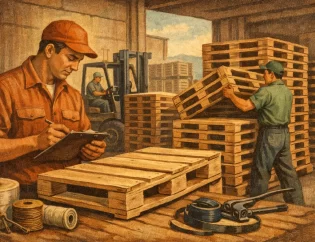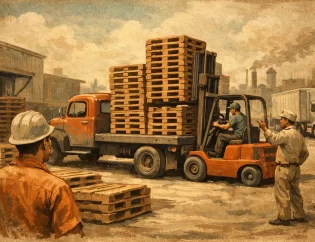

Pallet stacks usually become a problem slowly, then all at once. One week you have a manageable mix of usable pallets, damaged units, and returns. A few weeks later, they are taking up dock space, creating safety issues, and adding one more operational task your team did not plan for. That is why knowing how to manage pallet inventory matters. It is not just about counting pallets. It is about controlling space, cost, labor, and recovery value across your operation.
For most businesses, pallet inventory management works best when it is treated as an ongoing process rather than a cleanup project. Warehouses, manufacturers, distributors, and retailers all move pallets in different ways, but the same basic goal applies: keep the right pallets available, remove excess at the right time, and avoid letting damaged or surplus inventory turn into waste.
How to manage pallet inventory without adding more work
The most effective pallet inventory systems are simple enough for busy teams to follow every day. If the process depends on spreadsheets that no one updates or yard checks that only happen when space gets tight, it will break down quickly.
Start by separating pallet inventory into clear categories. In most facilities, that means at least usable pallets, repairable pallets, and scrap pallets. If your operation handles multiple sizes or grades, those should be separated as well. A mixed stack may seem convenient in the moment, but it creates confusion when teams need to ship, sell, recycle, or schedule removal.
This first step matters because pallet value is tied to condition and type. A reusable 48×40 pallet has a very different outcome than a broken custom-size pallet that needs to be recycled. If those units are stored together, it becomes harder to recover value and easier to overpay for removal or replacement.
Once categories are defined, assign physical storage areas for each one. Good pallet inventory management is partly a layout decision. Usable pallets should be close to where they are needed. Damaged and surplus pallets should be staged in a designated area that does not interfere with production or shipping. If you operate multiple docks or buildings, each location should follow the same storage logic so counts stay consistent.
Build a pallet count process your team will actually use
A lot of inventory problems come from inconsistent counting. Teams may know pallets are coming in and going out, but they do not have a reliable record of what is on hand, what is reusable, and what should be removed.
The fix is not always more complexity. In many cases, a basic recurring count process is enough. Daily visual checks may be necessary in high-volume facilities, while weekly counts may work for lower-volume sites. What matters is consistency and a clear owner. If everyone assumes someone else is tracking pallets, no one is really tracking them.
A practical count should capture pallet type, estimated condition, volume on hand, and any backlog waiting for pickup. If your business uses pallets across multiple sites, local counts should roll into a central view. That is where many companies run into trouble. One location may be overloaded with surplus pallets while another is ordering replacements, and no one sees the full picture.
For multi-site operations, centralized tracking makes a measurable difference. It helps procurement, operations, and facility teams understand where pallets are accumulating, where usable inventory can be recovered, and when pickups or replenishment should be scheduled. It also reduces the common habit of solving each location’s pallet issues with separate local vendors and separate processes.
Match pallet flow to your real operating patterns
If you want to know how to manage pallet inventory well, look at flow before you look at volume. Pallets move differently depending on your receiving patterns, outbound schedule, customer returns, seasonality, and the percentage of units that come back damaged.
A manufacturer may have a steady generation of surplus pallets every week. A retailer may see spikes around seasonal resets. A distribution center may fluctuate based on return freight and inbound product mix. The right process depends on those patterns.
This is where trade-offs matter. Holding a buffer of usable pallets can protect operations, but too much buffer ties up space and hides slow-moving inventory. Scheduling pickups too frequently keeps yards clear, but may not be the most cost-effective option if volume is low. Waiting too long can create congestion, safety concerns, and extra handling labor.
The better approach is to set pickup and replenishment triggers based on real thresholds. That might be a pallet count, a percentage of storage area used, or a fixed pickup cadence tied to your shipping calendar. The threshold should be easy for site teams to monitor and easy for your pallet partner to support.
Reduce waste by separating recovery from disposal
Many businesses still treat pallet removal as a waste problem when it is really a recovery problem. That mindset can cost money. Usable pallets may have resale value. Repairable pallets may still be recoverable. Even broken units may be recyclable rather than sent out as general waste.
When disposal is the default, companies often lose visibility into what they are paying to haul away and what they could have recovered. A more effective system separates pallets by outcome. Reuse inventory stays available for operations. Resalable inventory is identified early. Scrap moves into a recycling stream instead of mixing with trash or wood waste.
This approach supports both cost control and sustainability goals. It can reduce dumpster use, lower hauling expenses, and create a cleaner record of how much material is being recovered. For companies with environmental reporting targets, that visibility is useful beyond the warehouse floor.
Use one partner when pallet volume is ongoing
There is a point where pallet inventory becomes too active to manage through one-off pickups and local calls. If your business regularly buys pallets, sells surplus, and needs removal support, a fragmented vendor setup usually creates more administration than it saves.
Working with one pallet management partner can simplify the process. Instead of finding separate providers for pickup, recycling, resale, and supply, your team has one process for scheduling, one set of service expectations, and one reporting structure. That matters even more if you operate in more than one market.
The operational benefit is straightforward. You spend less time coordinating removal, less time comparing local service options, and less time trying to reconcile who picked up what from which site. A provider with national coverage and centralized account visibility can help standardize pallet handling across locations while still adjusting service to local volume and pallet condition.
For some businesses, that means free pickup for reusable loads. For others, it may mean paid removal for low-value or heavily damaged material. In stronger recovery situations, it can also mean direct payment for pallets with resale value. The right model depends on the mix of pallet types, the condition of the inventory, and the consistency of volume.
Common pallet inventory mistakes to avoid
The biggest mistake is waiting until pallets become a space problem. By then, the business is usually paying in other ways too – slower dock movement, extra touches, safety risk, and rushed removal decisions.
Another common issue is treating all pallets the same. Not every pallet should be stored, sold, repaired, or recycled in the same way. If your team cannot distinguish between reusable and scrap inventory quickly, the process will stay inefficient.
Some companies also rely too heavily on manual workarounds. A spreadsheet can be useful, but only if it reflects current conditions. If counts are outdated or disconnected from pickup scheduling, the information loses value. The goal is not to build a perfect pallet database. It is to maintain enough visibility to make timely decisions.
Finally, many businesses underestimate the value of standardization across sites. If one facility tracks by trailer load, another by stack, and another not at all, leadership cannot compare inventory or service needs accurately. Standard definitions, standard categories, and standard pickup triggers create control without making the process harder.
A practical standard for long-term control
If you are building a better system, keep it simple. Define pallet categories. Assign storage zones. Set a recurring count process. Create pickup thresholds. Separate recovery from disposal. Then make sure reporting is visible enough for both site teams and decision-makers to act on it.
That is the core of how to manage pallet inventory in a way that supports operations instead of interrupting them. The best systems do not ask warehouse teams to become pallet experts. They give them a clear process and a dependable service structure behind it.
For companies dealing with recurring pallet volume, that structure often matters more than any single count. When pickup, recycling, resale, and supply are managed through one coordinated program, pallet inventory becomes one less concern for the business and one more area where efficiency is easier to maintain.